
The Fix Most People Try First — And Why It's Risky
When a garage door starts down and then jerks back up, the first instinct is to find the force or travel-limit dial on the opener unit and crank it up. It's an easy adjustment, it's right there on the motor housing, and it feels like you've solved the problem when the door finally slams shut on the next try. The trouble is, that dial controls how much resistance the opener will push through before it decides something is in the way and reverses. Turning it up doesn't fix whatever is actually causing the resistance — a dirty sensor, a dragging roller, a spring that's lost its tension — it just tells the opener to ignore the warning and force the door down anyway. That's the exact safety feature that keeps the door from closing on a pet, a bike, or a kid's foot. It's worth understanding what's actually wrong before you touch that dial.
What the Symptoms Are Telling You
Garage doors don't fail randomly — the way they misbehave points to where the problem lives. A few common patterns:
- Door starts closing, gets a few inches to a foot down, then reverses — almost always a sensor or obstruction issue.
- Door reverses the instant you press the button, barely moving — often a sensor alignment problem or a wiring fault.
- Door closes most of the way, then stops and reverses near the floor — frequently a limit setting that's out of adjustment, or the track catching near the bottom.
- Door won't move at all, opener hums or clicks — points toward springs, cables, or a stuck roller rather than the sensors.
- Door closes unevenly, one side dropping faster than the other — usually a cable or roller problem on one track.
None of these are things you diagnose by guessing. A technician works through them in a specific order, starting with the simplest and cheapest possibility and moving toward the more involved mechanical repairs.
What a Technician Checks, In Order
1. The Photo-Eye Sensors
These are the two small sensors mounted a few inches off the floor on either side of the door track. If they're misaligned, dirty, or have a hazy lens — which happens more often here thanks to humidity and, closer to the coast, salt air settling on the contacts — the door will reverse almost every time, or refuse to close at all. The fix is usually quick: realign the brackets so both lights read solid rather than blinking, clean the lenses, and check the wiring at the connection points for corrosion. If a wire has been nicked by a lawnmower or a stored bike, that's replaced too.
2. Obstructions in the Door's Path
Before touching any settings, a tech checks the obvious — storage bins, a broom, debris blown in during an afternoon downpour, or anything sitting in the sensor beam's path. It sounds basic, but it's a common and free fix.
3. Limit and Force Settings on the Opener
If the door is closing partway and reversing consistently at the same point, the travel limit may be set wrong, telling the opener the floor is higher than it actually is. This gets reset to the manufacturer's spec, not cranked up blindly. Force settings are checked the same way — adjusted just enough to move the door smoothly, not forced past resistance.
4. Track Alignment and Rollers
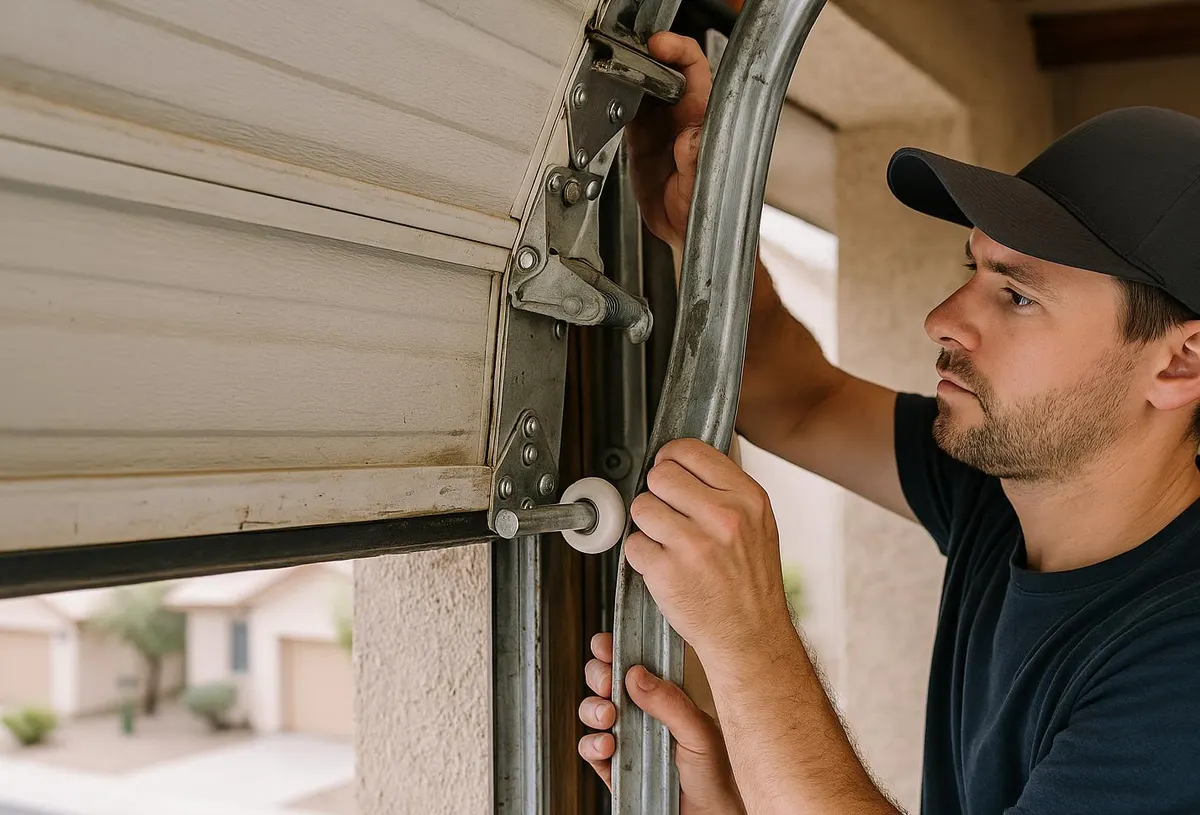
Garage doors here deal with a lot of humidity swings, and that moisture can cause wood-paneled doors to swell slightly or shift framing just enough to throw a track out of true. Rollers also take a beating — rust and grit build up faster in humid, coastal air, which makes them bind instead of rolling smoothly. A dragging roller reads to the opener as resistance, triggering a reversal. The fix is realigning the track and replacing worn rollers, often with nylon rollers, which hold up better than steel in this climate.
5. Cables and Drums
If one side of the door is hanging lower than the other, or the door looks tilted as it moves, a cable may have frayed or slipped off its drum. This throws the whole door out of balance, and the opener reverses rather than force an uneven load. Cables are inexpensive to replace but should be done alongside an inspection of the drum and spring tension, since a cable issue is sometimes a symptom of spring trouble rather than the root cause.
6. Torsion or Extension Springs
If the door won't budge, feels unusually heavy when lifted by hand, or the opener strains and clicks without movement, worn or broken springs are the likely culprit. A loud bang from the garage followed by a door that won't open is a classic broken spring sign. This is also the repair with the most risk attached — springs are under heavy tension and aren't a safe DIY project. It requires the right winding bars and know-how.
7. The Opener's Motor or Logic Board
If sensors, track, rollers, cables, and springs all check out, the problem may be electrical — a failing capacitor, a worn gear, or a logic board that's misreading signals. At this point, repair or full opener replacement gets weighed based on the unit's age and condition.
When to Call Wilton Manors Garage Door Pro
If your door is reversing, refusing to close, or hanging unevenly, it's worth having it looked at before the force dial gets adjusted in a way that masks a real mechanical problem. We handle everything from Garage Door Spring Repair to Cable & Roller Replacement, and we check the whole system — sensors, track, balance, and opener settings — rather than guessing at one fix. If track damage or humidity-related swelling is throwing the door out of alignment, our Off Track Door Repair service gets it back on true without just patching the symptom.
If your garage door in Wilton Manors, Oakland Park, or anywhere nearby isn't closing right, give Wilton Manors Garage Door Pro a call — we'll diagnose it properly and get it working safely again.