
Getting Your Wilton Manors Garage Door Ready for Our Mild Winter
A typical call this time of year starts the same way: the homeowner says the door was fine all summer, and now suddenly it's grinding, sagging on one side, or the opener is clicking without lifting. When a technician gets out there, the cause is almost always months of hurricane-season humidity and salt air finally catching up with the hardware — rust creeping into hinges, grit packed into the tracks from afternoon downpours, or a spring that was already weakening and just picked this moment to let go.
What "Winter" Actually Means Here
Nobody in Wilton Manors is scraping ice off a garage door, but the season change still matters. As the humidity drops and nights get cooler, wood-composite panels that swelled during the wet months start to shrink back down, metal components contract slightly, and the door settles into a different set of tolerances than it had in August. This is also the stretch when a lot of seasonal residents return and start using their garage daily again after months of the door sitting mostly idle — which is exactly when a quietly failing spring or a worn cable tends to show itself.
Start by Checking What Hurricane Season Left Behind
Before doing anything else, walk the full perimeter of the door and look for:
- Rust spots on hinges, the bottom bracket, or the track itself — common near the coast where salt air accelerates corrosion even on galvanized hardware.
- Swollen or soft spots on wood or wood-composite panels from months of moisture exposure.
- Debris buildup in the tracks from storm runoff and blowing yard material.
- Loose fasteners on brackets and the opener rail, which can work loose from repeated storm vibration and heavy door cycling during wind events.
Catching rust early matters more than most homeowners realize. A hinge or roller bracket that's just starting to pit can usually be cleaned and treated; one that's been left through another few months of humidity often needs full replacement.
Clean the Tracks, Don't Just Wipe Them
Use a stiff brush to get grit out of the track channel, then wipe it down with a damp cloth. Avoid spraying lubricant directly into the track — it attracts more dust and makes the buildup worse. Save the lubricant for the moving metal parts instead.
Lubrication: The One Job Most People Skip
After a wet, salty summer, hinges, rollers, and the spring itself are often drier and noisier than they should be, even though everything feels humid outside. A silicone-based garage door lubricant on the hinges, roller stems, and spring coils once the weather starts to cool down makes a noticeable difference in how smoothly the door runs and helps push back against the corrosion that salt air causes over time. Skip WD-40 for this — it's a cleaner, not a lasting lubricant, and it evaporates quickly in this climate.
Check the Weatherstripping
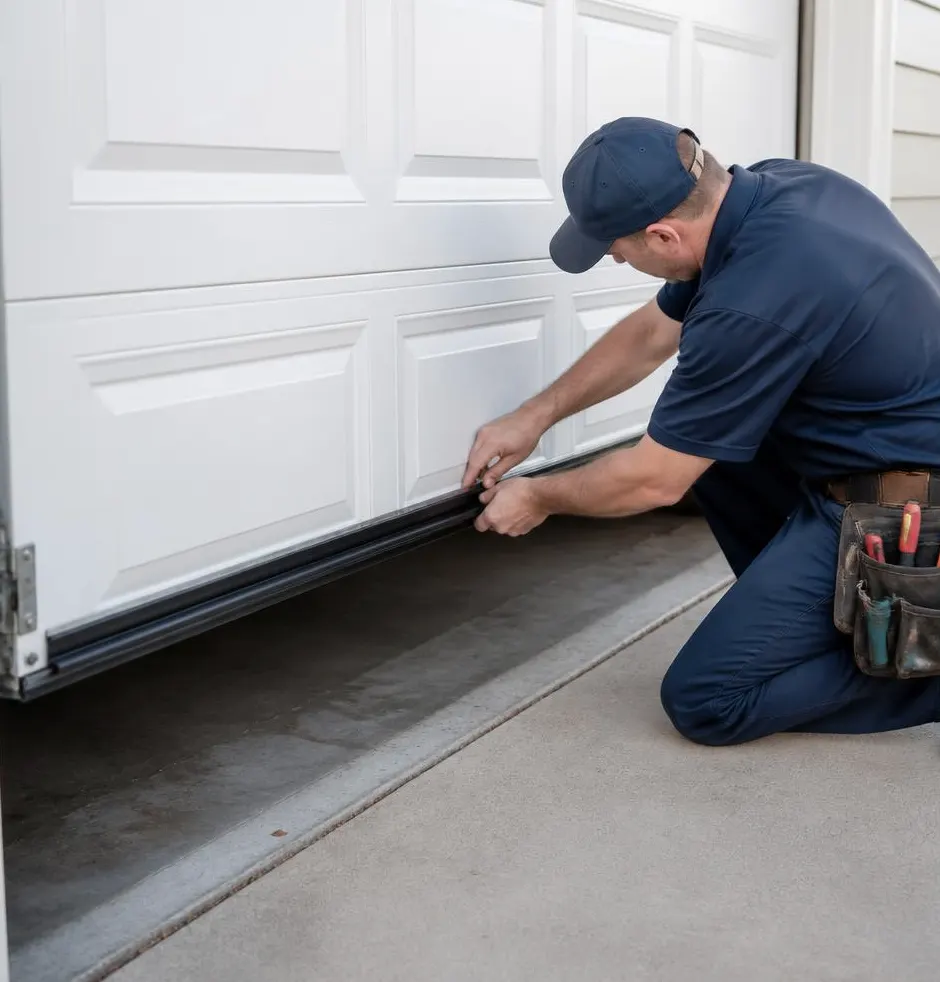
The rubber seal along the bottom of the door and the vinyl stop molding around the sides both take a beating from heat and UV exposure through the summer. As temperatures ease off, cracked or brittle weatherstripping becomes more obvious — gaps let in cooler night air, moisture, and the occasional curious lizard or palmetto bug. Replacing worn seals is a low-cost fix that also helps keep water out during the last of the season's afternoon storms.
Test the Opener and Safety Sensors
If the opener has been running hard through a summer of storm-related power surges, this is a good time to make sure it's still behaving correctly:
- Test the auto-reverse function by placing a block of wood in the door's path.
- Wipe down the photo-eye sensors near the floor track — pollen, dust, and spiderwebs build up fast in Florida and are a common cause of doors that won't close.
- Listen for grinding or straining sounds, which often point to a spring that's compensating for wear rather than an opener problem at all.
- Check the battery backup if the opener has one, especially after a season of outages.
Think About Usage Patterns Before the Busy Months
As seasonal residents return and households start using the garage door more often — running errands, holiday travel, visitors coming and going — a door that was barely used all summer suddenly gets put through daily cycles again. Springs and cables that were already near the end of their life span handle this jump in use poorly. If the door has felt heavy, uneven, or slow to respond over the last few months, now is the time to deal with it, not after it's being opened and closed five times a day.
When to Call Wilton Manors Garage Door Pro
If you're noticing rust on the hardware, a door that's suddenly louder or heavier, or an opener that hesitates before it lifts, it's worth having it looked at before the cooler months bring heavier daily use. We handle Garage Door Maintenance & Tune-Up visits that cover lubrication, hardware inspection, and seal checks in one trip, and we also take care of Cable & Roller Replacement when hurricane-season wear has gone past the point of a quick fix. Either way, we come out, diagnose what's actually going on, and give you a straight answer about what needs attention now versus what can wait.
If your garage door has been grinding, sagging, or just not acting right since summer, give Wilton Manors Garage Door Pro a call — we serve Wilton Manors, FL and the surrounding area, and we can usually get a technician out fast.